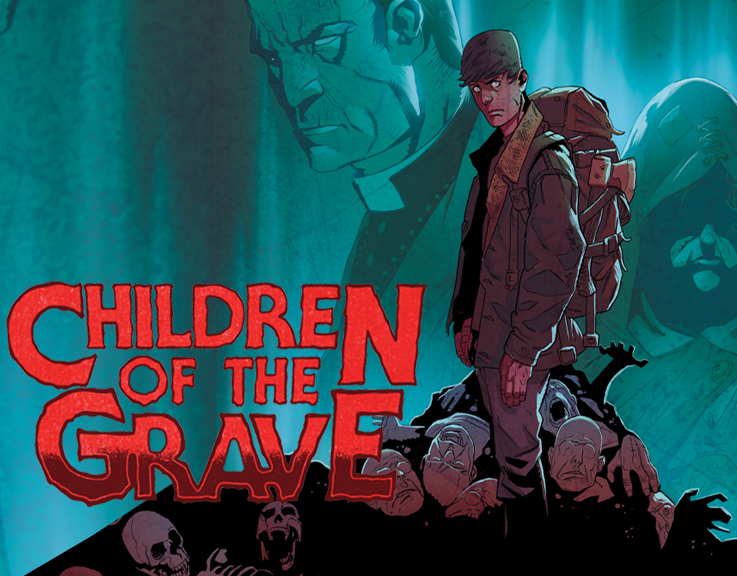
Children of the Grave ( Pixel Age 2020-2021) is a comic series which comes from the mind and creativity of writers Samuel J Romesburg, Ben Roberts and artist Gioele Fillipo.
The premise of the series is set as follows :
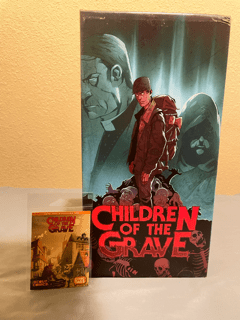
Children of the Grave Title Box with Comic tag
Thirty years in the future, humanity lives in a utopian world called “Terra,” where all needs are met by mysterious forces known as “The Providers.” The inhabitants, born without memory of their past or familial ties, enjoy a life free from hardship and adhere to a code of unquestioning acceptance. However, one individual, Daniel, rebels against this conformity, seeking answers about the old world and challenging the blissful ignorance of his peers. As he uncovers the truth, he realizes that humanity is once again on the brink of extinction due to an impending evil.
The comics consists of a total of 5 issues with good story telling and artwork. I really liked the art from issue #3 onwards. The covers are fantastic and there are several variant/metal versions also available on the Scout Comics website. On Comic Geeks app, the overall rating is 3.9/5 , however, after reading it personally, and amazed by the story telling, art and covers, I would like to give it a 4.1/5. The comic is for the mature readers only, and a must read if you like sci-fi/utopian content and if you like to support indie creators and developers.
Apart from the comic books itself, there exists a title box of this set which comes with one variant and full run of this comic along with a comic tag which is a digital download of the full series.
If you decide to grab one, feel free to comment on whether you liked it or not after giving it a read!
You know how they say “don’t judge a book by its cover”?
Well, I’m so glad I ignored that advice.
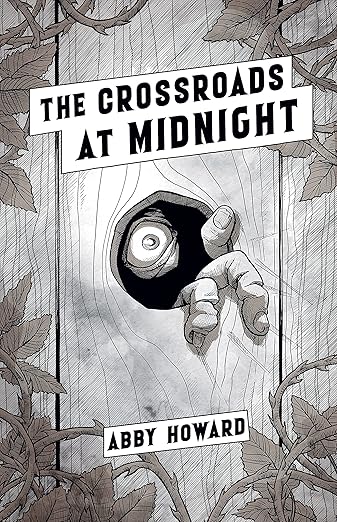
I was wandering through my library when a book I’d never seen before just stopped me in my tracks. ‘The Crossroads at Midnight‘. I had zero context. Never heard of the book, never heard of the author, Abby Howard.
But the cover art? It just grabbed me. It was atmospheric, a little creepy, and I immediately knew I had to check it out.
First Impressions: This Isn’t Your Average Graphic Novel
Right away, I noticed this book feels different. This isn’t your typical glossy, full-color graphic novel. The pages are thick, and the art inside is all stark, gorgeous black-and-white ink. It has a fantastic, almost manga-like quality to it that perfectly sets the moody, unsettling tone for what’s to come.
So, Who Is Abby Howard?
I was so impressed that I immediately had to look her up. The book itself is a bit mysterious about its creator, but the website (The Last Halloween) filled in the blanks.
Get this: Howard studied Evolutionary Biology, but after being a contestant on the web reality show Strip Search, she was able to pivot and chase her dream of being a full-time cartoonist. (Talk about a cool origin story!)
She’s been in the game for nearly a decade, and The Crossroads at Midnight is her first short horror collection. She also co-founded a game studio, Black Tabby Games, with her spouse, and they’re working on an episodic horror game called Scarlet Hollow. This author clearly lives and breathes the horror genre, and it shows in her work.
What It’s About: Five Stories That Will Haunt You
‘The Crossroads at Midnight’ is a collection of five chilling short stories. As I read them, I noticed a powerful, creeping theme tying them all together: feelings of intense isolation, loneliness, and crushing responsibility.
Each story feels distinct, but they all share that same quiet, unsettling heartbeat.
No spoilers, I promise! But here’s a quick peek at what you’re in for:
The Girl in the Fields: A young girl, feeling smothered by her conservative family, befriends a mysterious girl living on the other side of a fence.
Mattress, Used: A broke college kid does the one thing you should never do: he brings home a mattress he found on the street. It… does not go well.
The Boy From the Sea: A younger sister, feeling abandoned as her older sister grows up, befriends a strange boy while on vacation.
Our Lake Monsters: A girl has grown up with her family’s “pet” lake monster and is fiercely, unsettlingly loyal to it.
Kindred Spirits: An older woman living alone on the edge of a bog has a… peculiar houseguest.
My Final Take: 5/5 Stars
Honestly, there wasn’t a single story in this collection that I didn’t love.
If I had to pick one that felt slightly different from the others, it might be “Mattress, Used,” but it was still a fantastic, creepy read that absolutely belonged in the collection.
And the art. Seriously. Don’t let the black-and-white style fool you into thinking it’s simple. Howard is a master of using light and shadow to build dread. The lack of color honestly makes the horror more effective.
This has, hands down, rocketed onto my list of all-time favorite horror graphic novels.
I’m not the only one who loved it—I saw a great post on the subreddit r/graphicnovels that perfectly captured why this book works so well.
If you are a fan of horror, the macabre, or just brilliantly told short stories with art that will stick with you, you need to read this book.
Junji Ito is one of the most celebrated authors in the world of horror manga, known for works such as Uzumaki and Tomie, several of which have been successfully adapted into anime. Drawing inspiration from H. P. Lovecraft, his craft is widely acclaimed for its vivid portrayal of cosmic and supernatural horror.
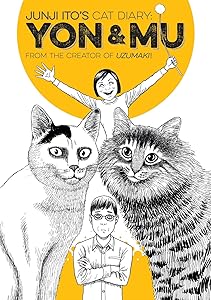
In Junji Ito’s Cat Diary: Yon & Mu, however, he takes a playful detour into light-hearted comic horror. The manga recounts how Ito bought a new house and invited his fiancée to live with him—only to discover she would be bringing her cats, Yon and Mu. Initially reluctant, Ito turns this situation into a 120-page tale where he comically depicts the “horrors” of life with the cats, charting his journey from irritation to affection.
What makes the book stand out is the way Ito portrays the evolution of his bond with Yon and Mu, presenting them as the true protagonists of each chapter. He shows how the cats became an essential part of his life and movingly recounts their journey up until their passing. The result is a story that blends humor, mild horror, and genuine heartbreak in equal measure.
With his distinctive linework and expressive character designs, Ito ensures that even this domestic story carries the same visual punch that defines his horror classics but in a comical fashion with a blend of love.
If you’re new to manga or to Junji Ito’s work, this book is a perfect entry point: a light-hearted, easy-to-read story that leaves you smiling while still showcasing his unique style.
Hi, all and welcome once again to Photon Quill ! This my second original story post and I would love your support – please give me feedback as what kind of content you would like next. I am planning to cover some book reviews and some original stories in near future. I would also like to write about some techs and tools that I use as a student. Stay tuned and please like, share, subscribe and comment to my posts ! Your support means a lot ! Now enjoy the story !
Kashi with the Enchanted Tree
The first time Kashi heard about the enchanted neem tree, he was eleven, hungry, and still brushing the chalk dust of school from his sleeves.
Kashi was taller than most boys his age, dark-skinned and wiry, with eyes that never seemed to rest on the ordinary. Where his classmates wrestled in the fields or skipped stones in the pond, Kashi stood apart, tracing patterns in the clouds or following the curl of a snake’s trail in the dust. His father, a weary schoolteacher, often muttered that the boy would grow up good for nothing—“a vegetable seller at best.” His mother, gentle and soft-spoken, shielded him with quiet affection, saving small coins to buy him toys or slipping an extra paratha onto his plate when she thought no one was watching.
Life in their village in India was not easy. Money was scarce, respect scarcer. Kashi had already learned the way neighbors measured worth by the size of a man’s house or the jewelry on his wife’s wrists. But for Kashi, the world was not made of money and debts—it was alive with mysteries.
So when he overheard his classmates whispering about a tree on the edge of the village—a neem tree that could grant any wish—his heart quickened. He knew at once he would find it. He imagined standing beneath its branches, asking not for sweets or toys but for bigger dreams: a stone house for his family, a warm coat for his father, enough intelligence to understand the secrets written in the shapes of clouds and leaves.
That evening, his mother stopped him on the path and handed him a plate of potatoes and parathas, the steam rising into the fading light. She smiled apologetically—she could never afford the milk powders and “growth mixes” the richer families fed their children. But to Kashi, nothing in the world tasted better than her food. He ate quickly, thanked her, and then, when she turned her back, slipped out into the night.
The path to the outskirts was already dark. Crickets sang, and every rustle in the grass sounded sharper than it should. He quickened his pace, clutching the edge of his shirt as though it could shield him from the night.
When he reached the grove, a line of trees rose like silhouettes against the moonless sky. Which one was the enchanted neem? His mother had tied threads around sacred trees before—he imagined he would find red and yellow strands glinting faintly in the dark. But here, all the trees looked the same, black and silent.
Kneeling beneath the largest trunk, Kashi pressed his palms together. “Please,” he whispered, “give my father a warm coat. Give my mother a house and jewelry, and give me enough wisdom to understand the world.”
The air shifted. A chill ran across his skin, and suddenly he felt he was not alone.
A voice slipped into his head, low and smooth, like oil poured in the dark. “Kashi… you are a bad boy. You ran away from home. Don’t you want to live with me instead? I will grant your wishes. I will take care of you. Come with me!”
Kashi’s eyes flew open. Just beyond the tree, something stirred—a shadow thicker than night, rising slowly into shape. It had no face, only a black outline that seemed to drink the light from the air.
And then came the words again, harder this time, inside his mind: “I won’t let you go back to your parents. I will take you with me!”
His legs trembled. He understood, with a certainty that felt carved into his bones, that this was not god or guardian, not the enchanted tree he had come seeking. This was something grotesque, something dark that fed on children’s longing. He should never have come.
The thing moved closer. Something cold and rough clamped around his left ankle. Kashi gasped, trying to wrench free, but the grip only tightened, searing his skin. Panic burst inside him. He shut his eyes and whispered the first prayer that came to his lips.
And then—he felt it. A faint glow. He opened his eyes and saw, just steps away, the neem tree, its trunk wound with sacred threads, its base lit by the dying flame of clay lamps left by the village women. Summoning all his strength, he dragged himself toward it. The grip burned at his ankle, but he reached out, fingers stretching desperately—
His hand brushed the sacred thread.
In that instant, the hold on his ankle vanished. He stumbled forward, crashing against the neem’s bark. His head struck hard, and the world dissolved into black.
When Kashi awoke, he was in his own bed. The morning light streamed through the window, and for a moment he wondered if everything had only been a dream. His mother was humming in the kitchen, and the smell of frying potatoes filled the room. Relief washed over him—until he shifted his leg.
A sharp sting shot through his left ankle. He pulled back the blanket and froze. Around the skin was a raw, circular mark, darkened as if burned by invisible hands. He touched it, and the memory of the shadow’s grip came rushing back.
Kashi never spoke of that night. Not to his parents, not to his friends. He carried the secret like a second shadow, hidden behind his daily routines.
Years passed. He became a teacher, like his father before him. He stayed in the village with his mother, caring for her after his father’s death. In the evenings, when the house grew quiet, he filled notebooks with stories—tales of strange voices, sacred trees, and the fine thread between danger and salvation.
But the mark on his ankle never faded. Even now, at twenty-five, it itches whenever he strays too close to the edge of the village, or when the night grows too still. Sometimes, lying awake, he wonders if the shadow still waits among the trees, whispering to children with curious hearts.
And sometimes, he closes his eyes and whispers back a thank-you—to the neem tree, to the faint light of the diyas, to whatever power it was that chose, on that night, to let him go.
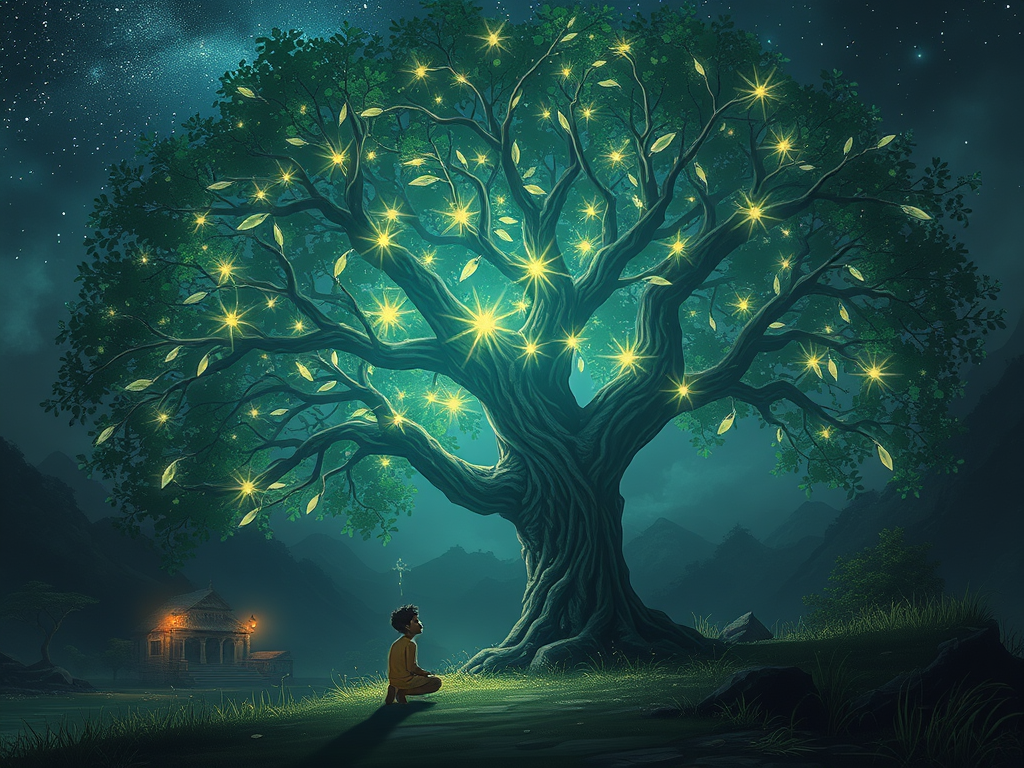
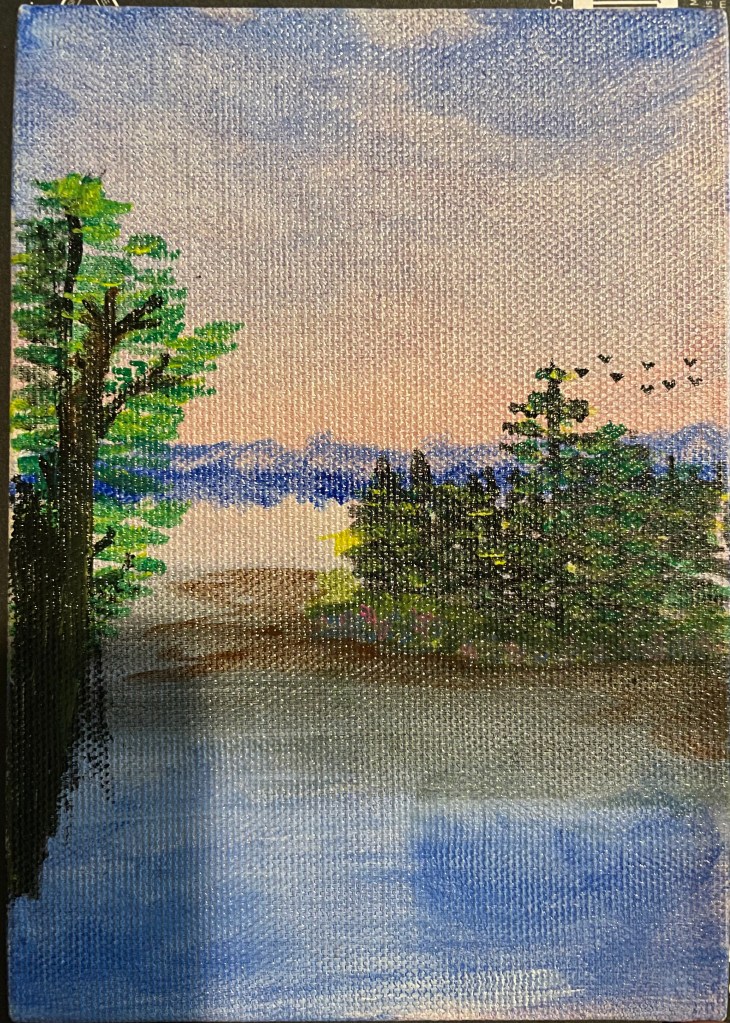
Hi everyone, this is my first original post so please be a little kind to me. I named the character after me as why not ! It was easy and to avoid trouble from others. To make it a bit easier to read I have used ChatGPT to refine the flow and some grammatical mistakes. I have also added a generated image to convey the feelings I wanted and an original image that I drew to say that while I am not good with subjects, I can at least handle a bit of scenery. Please give me your support so that I keep sharing and writing new things – now I am up with my shenanigans – and leave you all with my post to enjoy and read!
After another long day of classes, Amit walked home under the fading evening light. His phone played Supernatural by Ariana Grande, the melody wrapping around his thoughts. As the song swelled, he imagined himself as more than just another tired graduate student.
What if he could be the hero of everything around him?
In his mind’s eye, the scene unfolded: a party filled with laughter, the sudden shattering of danger—a glass panel falling from above. He alone notices it, he alone acts. In a heartbeat, he launches into the air, eyes blazing like a superhero, disintegrating the shards with laser beams before they touch the ground. Without seeking gratification from others, he flies way. Then he keeps flying, soaring through the night, weaving through clouds with the elegance of a fighter jet. For a moment, he is limitless. For a moment, he belongs to the sky.
But when the song fades, reality presses in again. Amit feels small, ordinary, unremarkable. He has friends, yes, but few—countable on fingertips—and even then, a loneliness he cannot name clings to him. It is his fault, he tells himself. He is capable in many ways, yet in others—connection, love, fulfillment—he falters. His life feels like a shaky Atlantis, half-submerged, impossible to save.
He has tried to move forward. He tried to love, to open himself, but insecurity and inner demons dragged him away. He drowned the void in food, in endless streams of internet content. Yet the void remained. He cannot even define it—where it lies, what it means—only that it is there. Perhaps he knows, deep down, but refuses to confront it. Some would call him unwell, unhinged, disconnected from the social fabric, from worldly success or wealth. But isn’t that the modern condition? Aren’t we all like this—unsure of what we seek, whom we strive to impress, what we work toward?
Maybe we should have realized long ago: we are only human, tasked with the simple act of caring for ourselves. Society, government, admiration, fame—perhaps they should never have mattered. But Amit’s emotions build like static. The silence of life is suffocating. Every day feels like a burden he cannot shake.
And yet—he whispers no. No, he still has a heart beating, still a will to fight.
But what is he fighting against?
He calls it the System.
A strange, invisible entity that places each of us where we belong. It feels deterministic, like an equation whose solution has already been calculated. Hard work, he muses, doesn’t guarantee success—because the System flows like a river. You cannot swim against it; at best, you move with it. People call it “luck,” but Amit disagrees. It is more precise than luck: the right people, the right place, the right project, the right moment. Once the initial conditions are set, the trajectory unfolds, and there is no escape.
Even if you fight, if you push hard enough to perturb the conditions, you often remain in the same basin of reality. Maybe the attractor shifts, maybe the details change—but the outcome is similar. Only rarely does a tiny nudge redirect you to another basin entirely. And even then, there is always a trade. Nothing comes free. No one is ever fully happy.
Still, Amit longs to fight the System. To believe that on the other side there is something—or someone—waiting. Maybe it is God. Maybe it is academic success. Maybe it is a woman he will one day love and marry. Whatever it is, he hopes that when it arrives, he will be complete, without further desire. That belief alone keeps the wheel turning.
It reminds him of Zima Blue, that haunting episode about purpose. Amit, too, wants to find the one thing meant for him, the act that consumes him utterly. He wants to drown in it, to dissolve into meaning.
And yet, perhaps the truth is simpler. Even when life feels like an endless sea of self-doubt, a tiny glimmer can change everything. It could be a song that stirs your heart, a fleeting conversation, a sunset that colors the sky, or the delicate bloom of a flower on the roadside. These small portals pull us out of the spiral and bring us back into reality—a reality where we can mend what is broken, work toward what matters, and remind ourselves that joy is still possible.
Life moves in cycles—crest and trough, rise and fall. At times we are vulnerable, at times we are triumphant. What defines us is not the absence of hardship, but how we navigate these shifts. And perhaps it is in those fragile moments of beauty, however brief, that we rediscover our strength, our purpose, and the courage to keep turning the wheel forward.
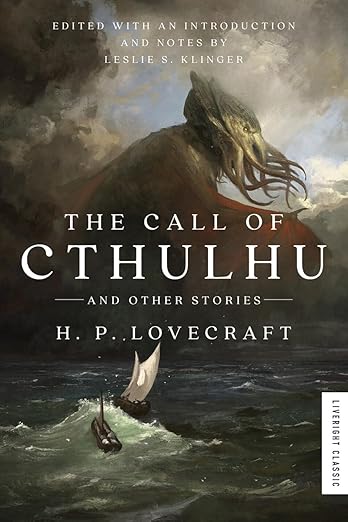
Howard Phillips Lovecraft, born on August 20, 1890 in Providence, Rhode Island, died at the age of 47 without ever achieving any financial success. In his lifetime, he never experienced fame and only was able to publish some of his works in pulp magazines. Inspired by authors like Edgard Allen Poe and Robert Chambers, he created short stories and poems that captured a new kind of horror which incorporated cosmic elements, mathematics, astronomy, fictional gods and characters – which has now become its own genre. As of today he is well known as the creator of ‘Cosmic Horror’, ‘The Elder Gods’, ‘The Cthulhu mythos’ and so many more…. his short stories has inspired writers and creators like Stephen King, Neil Gaiman, Junji Ito and many others who inspired by his style has put several pearls of cosmic horror out in front of us.
H.P.Lovecraft
“That is not dead which can eternal lie,
And with strange aeons even death may die.” – H.P.Lovecraft
The introduction is a nice read which introduces us to the life and the perspective of H.P.Lovecraft’s writing – the insecurities, the miseries, the hate, and the self deprecating thought that Lovecraft went through. The introduction also covers how his stories became famous after his death and gave rise to Lovecraftians who used his style and his characters across many of the presently famous horror titles.
After that the book has a compilation of several of Lovecraft’s famous stories, properly cited with resources and footnotes to explain and provide important background, origins, and references wherever necessary.
I belong to a category of readers who after finishing a book/story – thinks about it – makes an animation of its own in my mind and plays it forward and backward and often think about the characters and their endings. Because of this, Lovecraft’s style of writing goes very well with me as his writing leaves a lot of room for the reader’s imagination to run aloof. I would highly recommend all to revisit his work and to experience the Lovecraftian world – its characters, and mysteries.
Those who are interested should also watch this TED-ED video which provides a very nice introduction on H.P.Lovecraft and this YouTubeChannel and video which covers ‘Mythos Monday’ – Choosing the right edition and some of the great books and stories of H.P.Lovecraft.
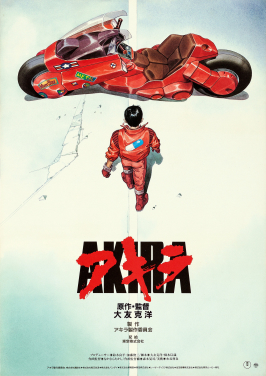
I am pretty sure the title I picked is going to require a lot of justification but let’s go with it for now. I recently watched a movie titled ‘AKIRA’ and I fell in love with the art, visuals and the theme of it… It is a 1988 Japanese animated cyberpunk action film which is today considered as one of the greatest animated films in the action and science fiction genres of all times.
AKIRA – movie poster
While the movie has an 8/10 IMDb rating, in my mind there is no doubt why this movie deserves more, why it is still relevant and why it has acclaimed such a name! The manga on which the movie is based on is also worth mentioning and the lovers of this franchise often likes to collect the 6 volume set which is equally breathtaking!
I won’t talk about the plot of the movie in much detail but I would quote the description given in the Crunchyroll website –
Clandestine army activities threaten the war torn city of Neo-Tokyo when a mysterious being with powerful psychic abilities escapes his prison and inadvertently draws a violent motorcycle gang into a heinous web of experimentation. As a result, a biker with a twisted mind embarks on a path of war, seeking revenge against a society what once called him weak.
Not only it is well made, but it goes way deeper making you think about the way one judge things and perceive others in the society. It sheds its take on corruption, politics, army, use of power and technology and moreover the effects on children on a post-apocalyptic war torn society.
Now coming to the science part of the movie – and here I would say a bunch of terminologies have been used like ‘Photon Collapse’ , ‘Quantum Mechanics’, ‘Birth of the Universe’, etc. in a metaphorical fashion. This instigated my mind at first and I tried to see at what level of accuracy is the film has used this terminologies. Actually, I found that there is a subreddit for sharing and discussing all things related to AKIRA and a lot of people have different takes on the meaning and message conveyed throughout the movie. I would say that the creators have reached out to science and have drawn some words out of it to make the plot of the movie feel much more engaging and mystical – not in a literal sense but as a metaphor to indicate the fragility of human control over forces as great as nuclear weapons, supernatural powers, or universal creation.
All in all, the movie was a great fun to watch and I believe it still holds its relevance in today’s day and age.
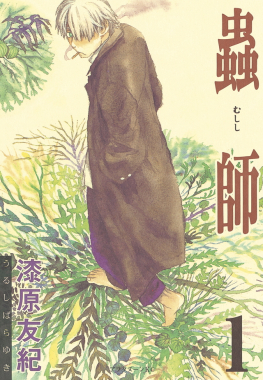
With an IMDb rating of 8.5/10, Mushi-Shi is one of the anime which delivers not only a calming and soothing sensation to its viewers but covers the supernatural and mysterious world of Mushi around the protagonist Ginko who is a Mushi-shi by profession. He travels around and helps people who are unaware of their world, their nature and presence and gets affected by them.
They are creatures only known as ‘Mushi,’ whose abilities range well into the supernatural. While their existence and appearances are unknown to the humans around them, there are a few like Ginko who is a ‘Mushi-shi’ that travels around to investigate and find out more about the ‘Mushi.’ During the course of his discovery and understanding, he helps those who are troubled by the Mushi themselves…
Both the manga and the anime is quite soothing and I believe a new manga series – collector’s edition is currently up for pre-orders on Amazon.
If you watch this series, watch one episode at a time rather than binge watching the whole to enjoy the experience. The episodes are a bit long and the story evolves in a slow paced way but the effects are quite calming, and soothing. Take my recommendation and watch it when you get time and leave your worries behind as you dive deep in the world of the Mushi and Ginko’s journey as Mushi-shi.


 Photon Quill